
How to Protect a Preserved Rose From Sunlight, Heat and Humidity
Good preserved rose care is less about adding water or sunlight and more about protecting the flower from conditions that can affect its lasting beauty.
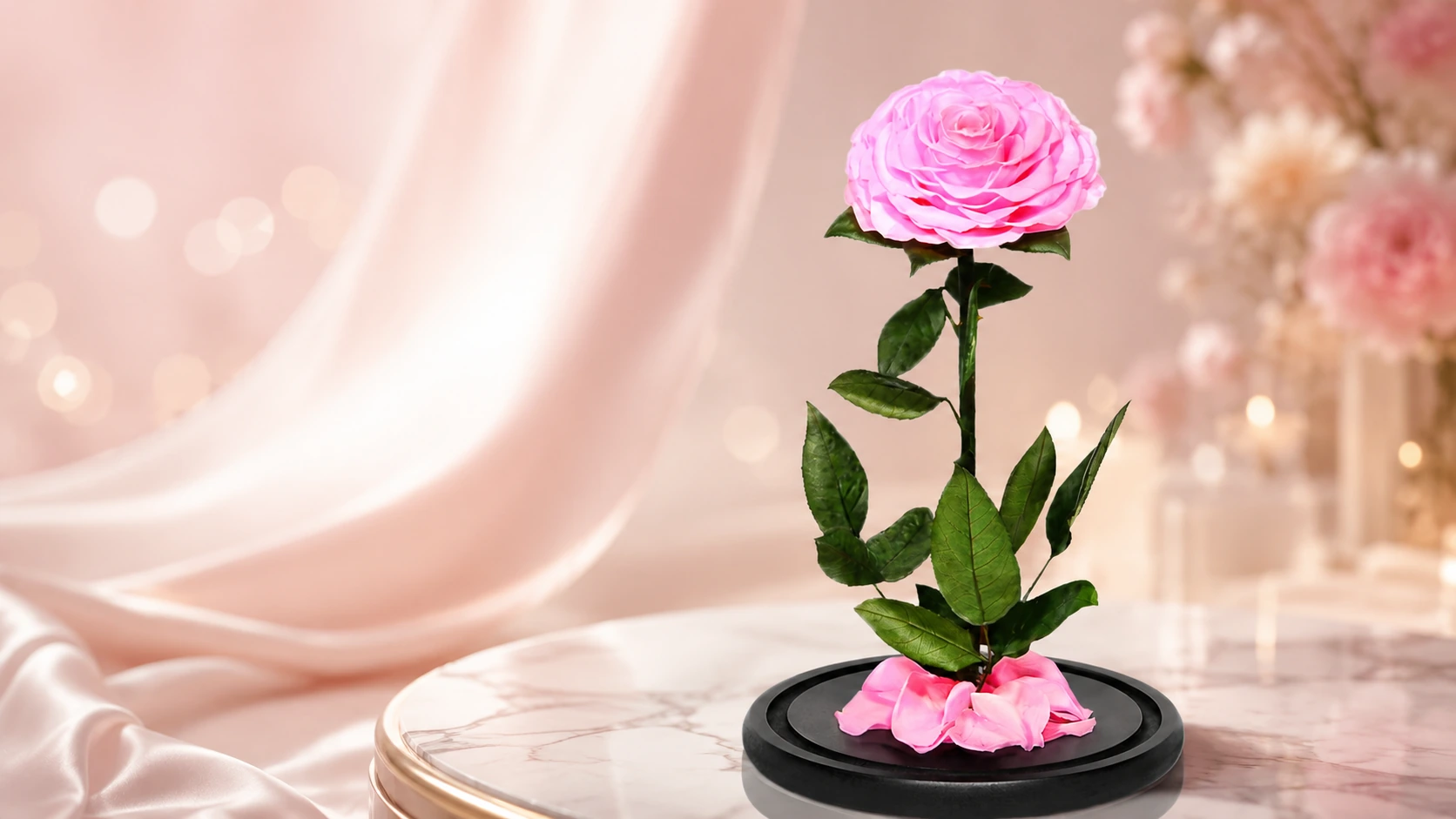
A preserved rose does not need water or sunlight. A suitable indoor display location is the foundation of good care.
A preserved rose may look like a fresh flower, but it should not be cared for like one. Direct sunlight, high heat, moisture, humidity, dust and frequent touch can all create problems over time.
The practical solution is simple: keep the rose indoors, choose a dry display location and handle the petals as little as possible. This guide explains how to apply those principles in an Australian home.
What Is a Preserved Rose?
A preserved rose begins as a real, natural rose. During preservation, much of the flower’s natural moisture is replaced with a preserving solution. This helps it retain its shape and flower-like appearance for far longer than a vase of fresh flowers.
Preservation is different from simply drying a flower. A dried rose often becomes brittle and changes in texture, while a preserved flower is treated to maintain a softer, more natural appearance.
Gold Rose Emporium describes its preserved roses as real roses that no longer require watering or sunlight and are intended for indoor display as meaningful keepsakes.
The Main Care Rules
| Care Factor | What to Do | What to Avoid |
|---|---|---|
| Sunlight | Display indoors in indirect light | Direct sun |
| Temperature | Keep at normal room temperature | Heaters, hot windows and fireplaces |
| Humidity | Choose a dry indoor location | Bathrooms and persistently humid rooms |
| Water | Keep completely dry | Watering, misting and soaking |
| Handling | Handle only when necessary | Touching or bending petals |
| Cleaning | Remove dust very gently | Wet cloths or aggressive cleaning |
| Display | Use the protective dome or case | Leaving the flower exposed unnecessarily |
Sunlight, Heat and Humidity
Direct Sunlight
Preserved roses do not need sunlight. Ordinary indoor light is fine; strong prolonged sun is not.
Excess Heat
A stable indoor environment is the goal. Avoid concentrated heat around the display.
Humidity & Moisture
Steam, condensation, splashes and damp rooms are poor conditions for preserved flowers.
Why Direct Sunlight Is Bad for a Preserved Rose
Preserved roses do not need sunlight. Gold Rose Emporium recommends keeping them away from direct sunlight because prolonged exposure can affect colour and appearance. The aim is not complete darkness; it is protection from intense, prolonged sun.
Better Locations
Bedside tables away from direct window light, display cabinets, shaded console tables, office desks and living-room shelves with gentle ambient light.
Avoid
Sunny windowsills, glass doors, conservatories, dashboards, balconies and exposed outdoor tables.
How Heat Can Affect a Preserved Rose
Gold Rose Emporium recommends room temperature and advises keeping preserved roses away from heat sources. Refrigeration or unusual temperature control is not needed.
Keep the rose away from: radiators, heaters, heating vents, fireplaces, hot mantels, ovens, stovetops, kettles, dishwashers, hot windows, electronics producing substantial heat, parked cars, garages and garden sheds.
Check the immediate conditions around the display. A room may feel comfortable while one shelf is affected by heater airflow or strong afternoon heat.
Why Humidity, Moisture and Water Matter
Gold Rose Emporium’s care guidance is straightforward: keep the flower away from moisture. High humidity can be especially relevant in coastal homes, during wet weather or in rooms with poor ventilation.
How to Protect a Preserved Rose From Humidity
Keep It IndoorsControlled indoor conditions are easier to manage.
Avoid BathroomsSteam and condensation create repeated moisture changes.
Avoid Kitchen SteamGive kettles, stovetops and sinks a wide clearance.
Watch Wet WeatherDo not leave it beside open windows in damp conditions.
Keep the Dome in PlaceUse it as physical protection from dust, touch and minor splashes.
Do not mist the petals, pour water into the display, place the stem in a vase of water or use a wet cloth on the flower. Proper preserved rose care means keeping the flower dry rather than trying to hydrate it.
Should You Keep the Glass Dome in Place?
Generally, yes. A dome helps protect the rose from dust, accidental touching and minor splashes during normal indoor display.
Important: a glass dome should not automatically be described as airtight or fully humidity-controlled. The room still matters. If the dome needs cleaning, remove it carefully, clean the glass separately and make sure it is completely dry before replacing it.
Cleaning and Handling a Preserved Rose
For glass-dome rose care, clean the dome more often than the flower itself. The safest approach is to minimise direct cleaning and handling of the preserved petals.
Clean the Dome
Use a clean, soft cloth suitable for glass. Keep cleaning products away from petals and stems, and ensure the dome is fully dry before replacing it.
If Dust Reaches the Flower
If necessary, use extremely gentle low-pressure dry air from a safe distance. A light dusting may be enough.
Avoid
Water, wet cloths, vacuum cleaners, high-pressure compressed air, heated hair dryers and brushes that may snag delicate petals.
Best Places — and Places to Avoid
Good Display Locations
Places to Avoid
How Long Does a Preserved Rose Last?
Gold Rose Emporium advises that its preserved roses can last around one year when kept at room temperature and protected from moisture, heat and direct sunlight. This is practical guidance rather than a guarantee that every flower will look identical for the same period.
Australian Climate and Indoor Microclimates
Australia has varied regions and seasons. Coastal humidity, Brisbane- or Darwin-type conditions, strong summer sun through windows, winter heater airflow and air-conditioning can all change the conditions around a display. Assess the microclimate inside the room rather than treating Australia as one climate.
Preserved Rose Care: Do and Don’t
Do
✓ Use normal room temperature
✓ Choose a dry display location
✓ Keep the protective dome in place
✓ Remove dust gently
✓ Keep the surface stable
Don’t
✕ Place it on a sunny windowsill
✕ Display it beside a heater
✕ Put it in a steamy bathroom
✕ Touch petals unnecessarily
✕ Leave it outdoors
What to Do If a Preserved Rose Gets Wet or Humid
After High Humidity
Move the rose to a dry, stable indoor location. Keep it away from direct heat, avoid touching softened or altered petals and allow the surrounding room conditions to normalise.
If the Rose Gets Wet
Do not rub the petals or apply direct heat. Do not use a hair dryer, oven or heater. Move it to a dry room and contact Gold Rose Emporium if the appearance has materially changed.
How to Store a Preserved Rose Safely
Use a dry indoor space and keep the original protective box where practical. Store the arrangement upright and avoid crushing the display or placing heavy objects on top.
Avoid storage in: direct sunlight, hot garages, garden sheds, parked vehicles and damp basements.
Preserved Rose Care vs Fresh Rose Care
| Care Need | Fresh Rose | Preserved Rose |
|---|---|---|
| Water | Required | Do not water |
| Sunlight | Some natural light may be suitable | No sunlight required; avoid direct sun |
| Vase | Usually required | Not required |
| Stem trimming | Often required | Not required |
| Flower food | Often used | Not required |
| Humidity control | Less central | Avoid high moisture and humidity |
| Handling | Delicate | Delicate |
| Purpose | Temporary fresh display | Longer-term keepsake |
Final Preserved Rose Care Routine
When You First Receive It
Remove shipping packaging carefully, inspect the display without touching the petals, choose a dry indoor location and keep the dome in place.
During Normal Display
Leave the rose dry, avoid direct sunlight, heat and steam, clean dust from the dome occasionally and move the arrangement only when necessary.
Occasionally
Check that seasonal changes, heating, air conditioning or nearby windows have not made the display area hotter, sunnier or more humid.
Frequently Asked Questions About Preserved Rose Care
Does a preserved rose need water?
No. Gold Rose Emporium says its preserved roses do not need watering.
Does a preserved rose need sunlight?
No. Preserved roses do not require sunlight and should be protected from direct sun.
Can I keep a preserved rose near a window?
Yes, if it is protected from strong direct sun and prolonged afternoon exposure.
Can I keep a preserved rose in the bathroom?
It is not recommended because steam, condensation and humidity add moisture.
Can I mist a preserved rose?
No. It does not require hydration and should remain dry.
Can preserved roses get wet?
They should be kept dry. If one gets wet, do not rub the petals or apply direct heat.
How do I clean a preserved rose?
Minimise contact with the petals. For a dome display, clean the glass more often than the flower itself.
How long do preserved roses last?
Gold Rose Emporium advises that its preserved roses can last around one year when kept at room temperature away from moisture, heat and direct sunlight.
Should I remove the glass dome?
Generally, leave it in place for normal display and protection.
Can I display a preserved rose outside?
Outdoor display is not recommended because weather, humidity and sunlight can affect preserved flowers.
Preserved Roses Need Protection, Not Fresh-Flower Maintenance
Keep the rose indoors at room temperature, away from direct sunlight, heat, water and high humidity. Leave the glass dome in place when possible, remove dust gently and admire rather than handle the delicate petals.
A Suitable Indoor Environment Makes All the Difference
Protection from sunlight, heat and moisture, together with minimal handling, are the foundations of good preserved rose care.
